
Types of Gutters: A Homeowner’s Guide to Styles, Materials, and Sizes
Thinking about replacing your gutters? One of the first things to understand is that gutters are not all the same. The profile, material, size, and downspout setup all affect how well the system handles rain, snowmelt, leaves, and ice.
For homes in Western MA and northern Connecticut, those details matter. Heavy rain, freeze-thaw cycles, roof snowmelt, and tree cover from oak, maple, birch, and pine all put extra demand on a gutter system. This guide breaks down the main types of gutters, how 5 inch and 6 inch systems compare, and what to consider before choosing a new system.
The Main Gutter Styles
The profile is the shape of the gutter. It affects how the gutter looks, how it attaches to the house, how much water it can carry, and how easily leaves and debris move through the system.
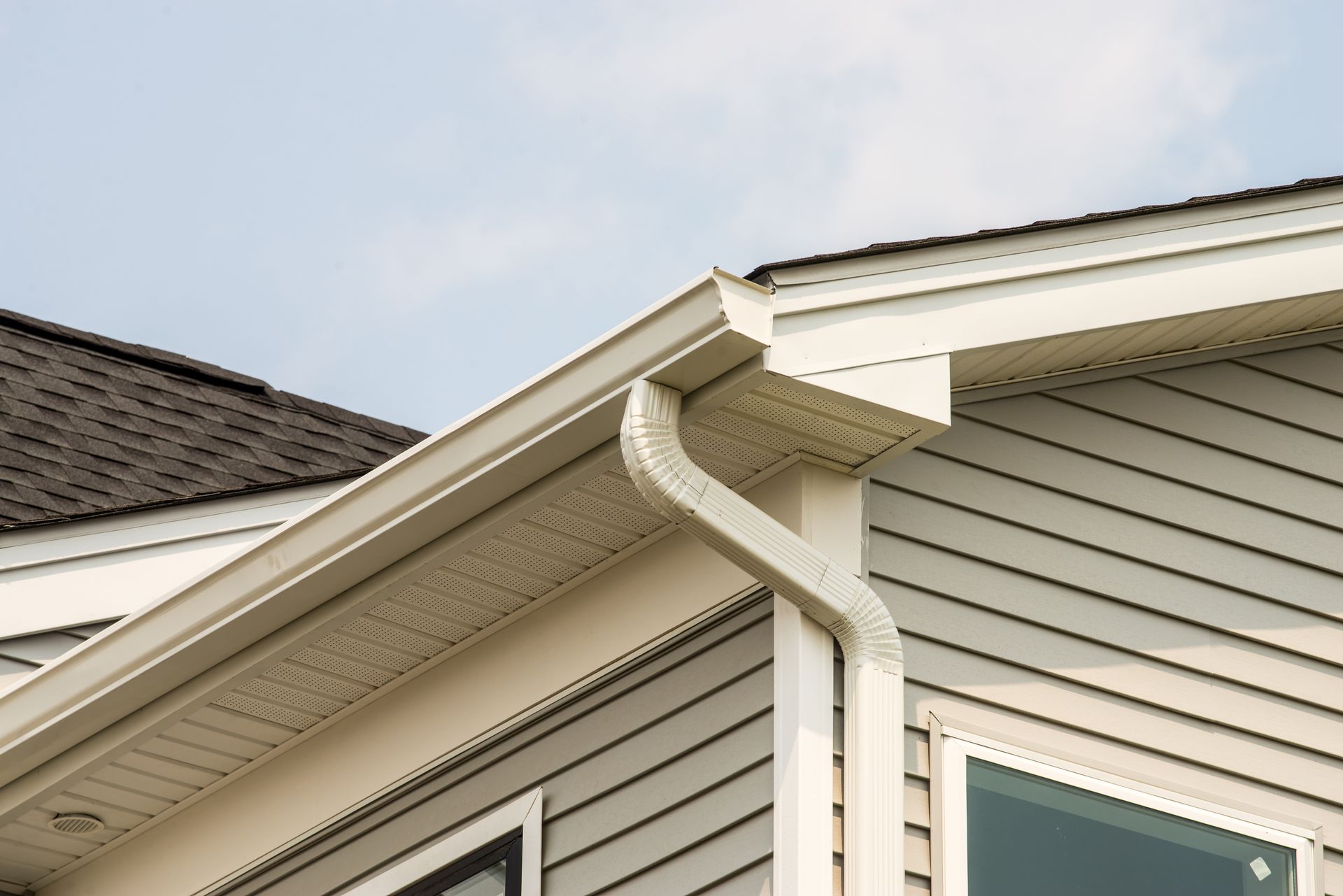
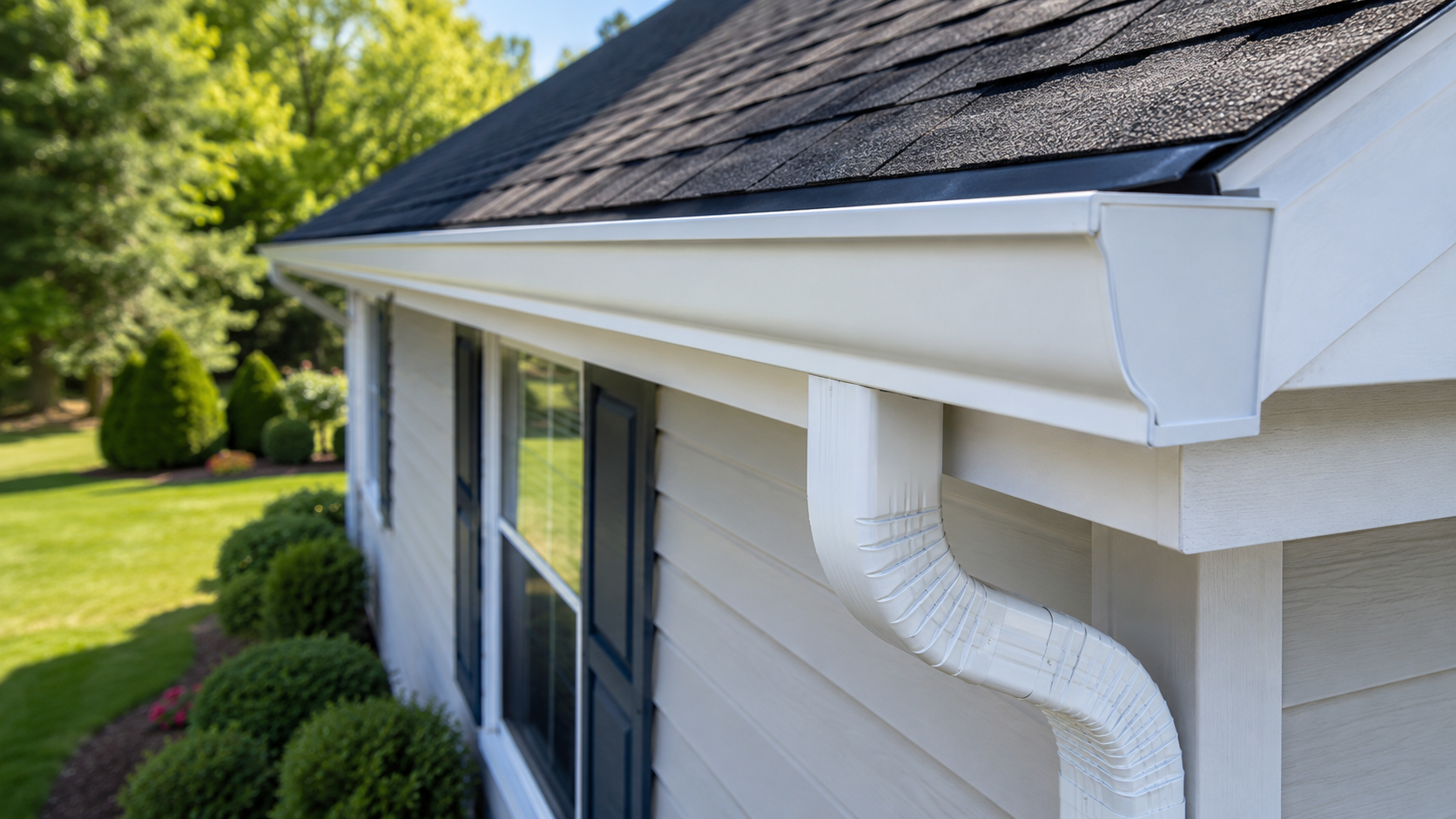
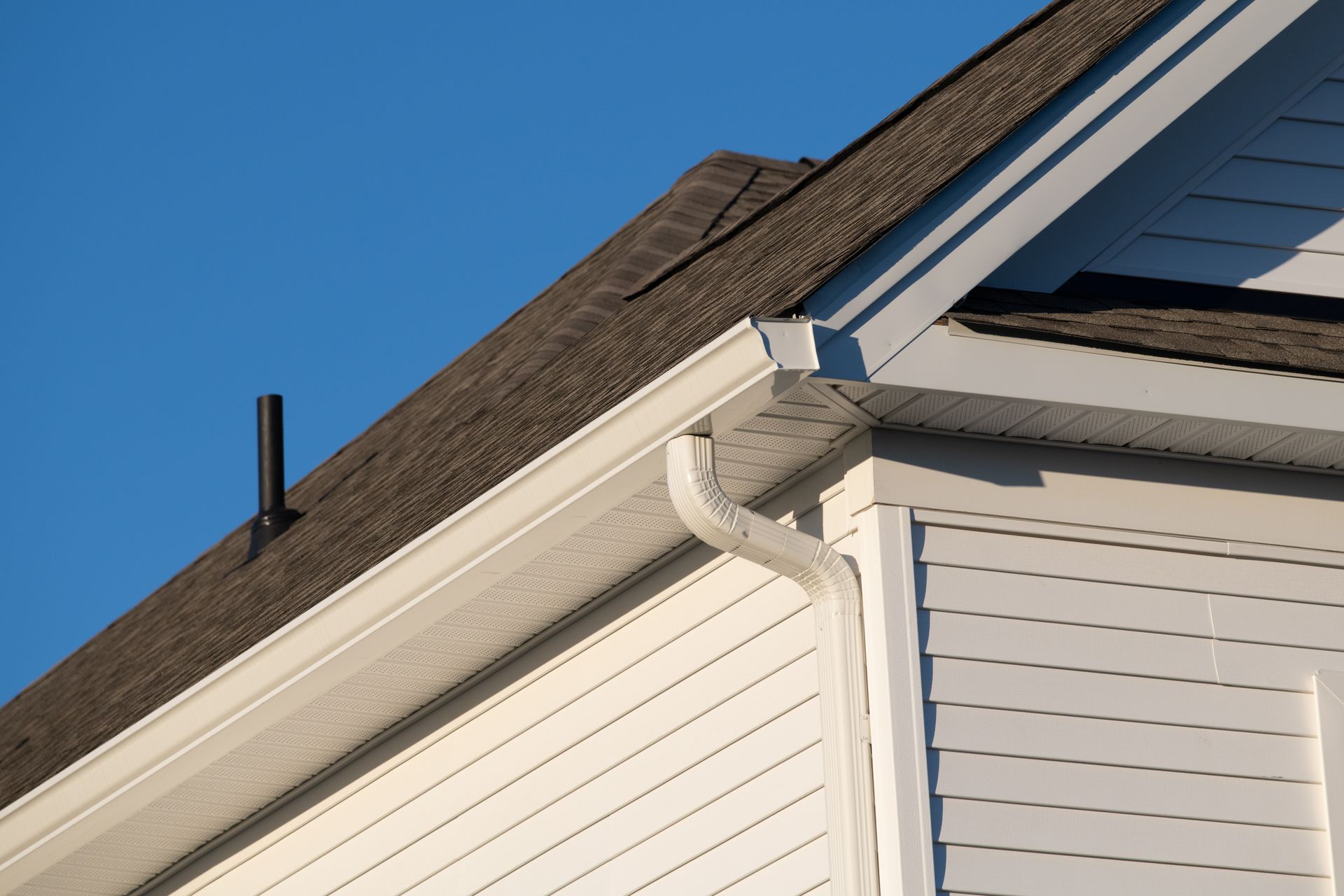
K-style gutters are the most common residential option. They have a flat back that mounts to the fascia board, which is the board along the edge of the roof. The front has a shaped face that looks similar to crown molding. That shape gives the gutter more interior volume than a half-round gutter of the same width. Standard residential sizes are 5 inch and 6 inch.
Half-round gutters have a rounded trough shape. They are often used on historic homes, older Colonials, Tudors, and period-style properties. The smooth inside helps leaves and debris move through more easily, but the tradeoff is capacity. A half-round gutter holds less water than a K-style gutter of the same width and usually needs different hanger hardware.
Box gutters are rectangular and are often built into the roof structure instead of attached to the outside edge. You see them more often on commercial buildings, institutional properties, and some large historic homes. Fascia gutters create a cleaner, modern look because the gutter body works into the fascia area. Yankee gutters, also called built-in gutters, sit within the roof plane itself and may appear on older homes in places like Northampton, Amherst, Longmeadow, Springfield, and Hartford. These are usually lined or repaired rather than replaced with standard gutters because removing them can change the roofline.
Gutter Styles at a Glance
| Style | Look | Capacity | Best For | Notes |
|---|---|---|---|---|
| K-style | Crown-molding profile | High | Most homes | Common in 5 inch and 6 inch widths |
| Half-round | Rounded trough | Lower at same width | Historic homes | Sheds debris well but needs special hangers |
| Box | Rectangular, often built in | Very high | Commercial buildings and large roofs | Often part of the roof structure |
| Fascia | Clean and modern | High | Homes with little roof overhang | Integrates with the fascia area |
| Yankee / built-in | Hidden in roof plane | Varies | Older homes | Usually lined or repaired instead of replaced |
Seamless vs. Sectional Gutters
Another choice you will see is seamless vs. sectional gutters. Sectional gutters come in shorter pieces that connect together along the roofline. Those connection points are the weak spots. They are where leaks tend to start and where small debris can catch.
Seamless gutters are made from one continuous run of material cut to fit the home. The straight runs are fabricated on site from a coil of gutter material, so each piece is made for that section of roof. There are still corners, outlets, and end caps, but there are fewer joints across the long runs. That is the main benefit: fewer seams means fewer places for water to escape.
Gutter Materials for New England Homes
The material affects how the gutter looks, how long it lasts, how it handles winter, and whether it can be made seamless on site. Some materials are common for everyday residential gutter installation. Others are specialty choices used for appearance, historic homes, or higher-end projects.
Aluminum is the most common choice in this region. It does not rust, can be formed seamless on site, and comes in many colors. For most homes in Western MA and northern Connecticut, aluminum makes practical sense because it balances performance, appearance, and maintenance.
Copper is a premium option with a long lifespan and a natural patina over time. Zinc is another long-lasting specialty material. Galvanized steel is strong, but it can rust if the protective coating wears down. Vinyl is usually sectional, not seamless, and can become brittle in deep cold. That matters in New England because freeze-thaw cycles are part of the climate. For budget planning, it may help to review what new gutters cost, but the right material should still be based on the home and how the system needs to perform.
Gutter Materials for New England Homes
| Material | Typical Lifespan | Available Seamless? | Cold Weather Notes |
|---|---|---|---|
| Aluminum | 20 to 30 years | Yes | Most common here; will not rust; can dent under heavy ice |
| Copper | 50 to 100 years | Yes | Long lifespan and natural patina; premium material |
| Galvanized steel | 20 to 30 years | Yes | Strong under snow load; can rust over time |
| Vinyl | 15 to 20 years | No | Sectional only; can become brittle in deep cold |
| Zinc | About 50 years | Yes | Durable specialty material with patina |
5 Inch vs. 6 Inch Gutters: What Size Do You Need?
Gutter size matters because the system has to move water as fast as the roof sends it down. For K-style gutters, the two common residential sizes are 5 inch and 6 inch. A 5 inch K-style gutter holds roughly 1.2 gallons per linear foot. A 6 inch K-style gutter holds about 2.0 gallons per linear foot. That gives the larger gutter meaningfully more capacity during heavy rain or fast snowmelt.
A 5 inch gutter can work well on many average homes with a moderate roof pitch. A 6 inch gutter may make more sense when the roof is larger, steeper, longer, or surrounded by heavy tree cover. Roof pitch matters because a steep roof sends water down faster. In some cases, fast-moving runoff can overshoot a smaller gutter even when the roof does not look oversized.
The fascia also needs to be considered. A 1x6 fascia board usually works well with a 5 inch gutter. Some homes can accept 6 inch gutters cleanly, while others need a closer look at the roof edge, trim, and how the gutter will sit. In the Pioneer Valley and northern Connecticut, heavy snowmelt, summer storms, inside valleys, and dense tree cover can all affect the recommendation.
5 Inch vs. 6 Inch K-Style Gutters
| Comparison Point | 5 Inch Gutter | 6 Inch Gutter |
|---|---|---|
| Water held per linear foot | About 1.2 gallons | About 2.0 gallons |
| Roof area served | Up to about 5,500 sq ft adjusted area | Up to about 7,960 sq ft adjusted area |
| Standard downspout | 2x3 | 3x4 |
| Roof area the downspout drains | About 600 sq ft | About 1,200 sq ft |
| Typical fit | Average roofs and moderate pitch | Larger roofs, steep pitch, long runs, or heavy tree cover |
Don’t Forget the Downspouts
A gutter is only part of the drainage system. The downspout has to move the water out of the gutter fast enough. A wider gutter can catch more water, but if the downspout is too small, the system can still overflow.
A 2x3 downspout has about 6 square inches of opening and drains roughly 600 square feet of roof area. A 3x4 downspout has about 12 square inches of opening and drains roughly 1,200 square feet. The usual pairing is a 5 inch gutter with a 2x3 downspout and a 6 inch gutter with a 3x4 downspout.
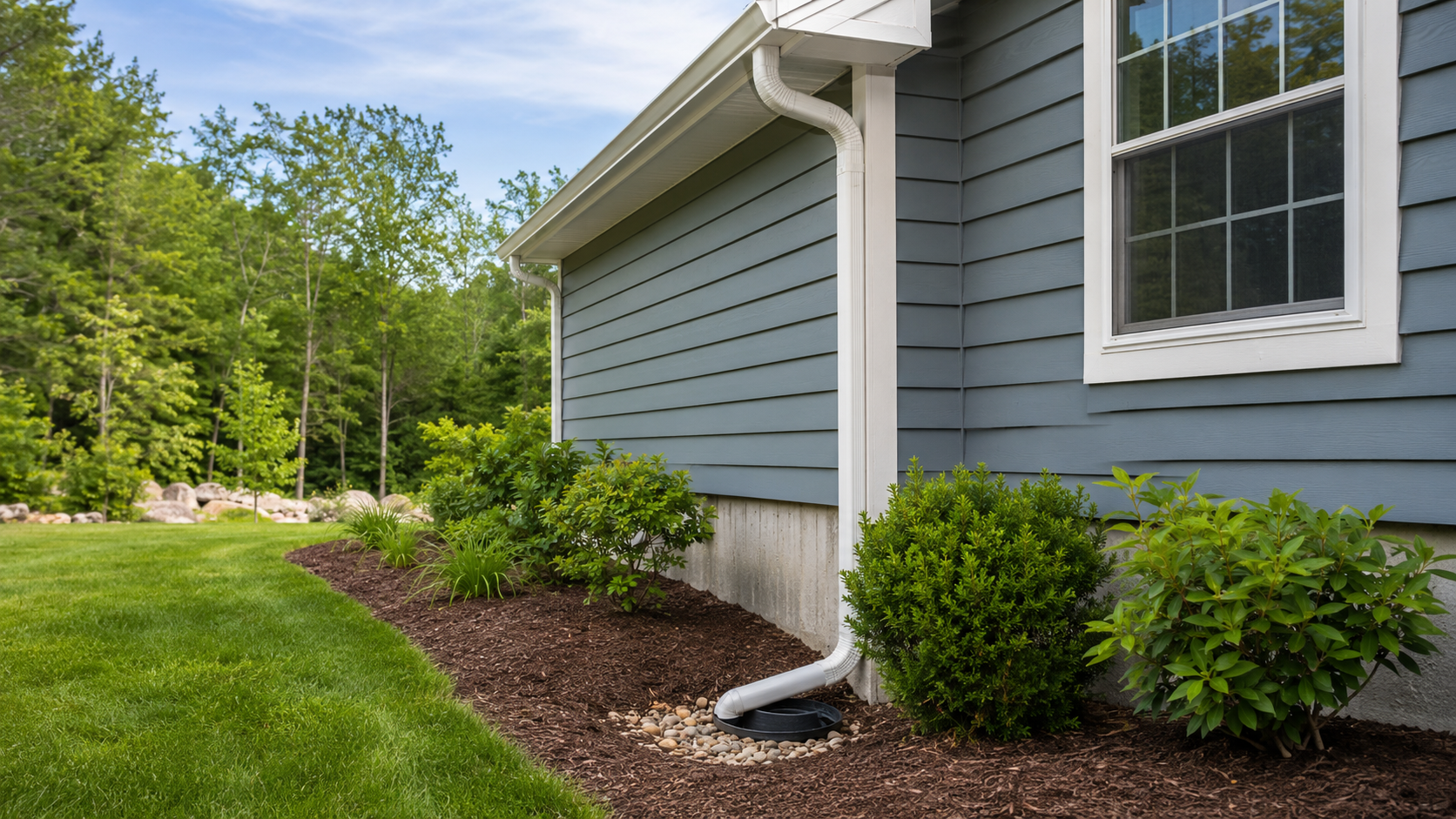
One common mismatch is a 6 inch gutter feeding into a 2x3 downspout. The larger trough fills at the rate the roof delivers water, but the smaller outlet cannot always empty it quickly enough. Downspout placement matters too. A good rule of thumb is one downspout every 30 to 40 feet of gutter run, with extra attention at inside corners where two roof slopes drain toward one point. If water needs to be carried away from the foundation, underground downspouts may also be part of the plan.
What Advanced Seamless Gutters Installs and Why
Advanced Seamless Gutters fabricates seamless aluminum gutters on site for homes across Chicopee, Western MA, and surrounding areas. The company installs both 5 inch and 6 inch systems, which means the size can be recommended based on the roof rather than whatever happens to be pre-cut.
For many homes in Hampden County, Hampshire County, Franklin County, and northern Connecticut, seamless aluminum K-style gutters are a practical fit. They are clean-looking, rust-resistant, available in multiple colors, and made to fit the home. Advanced Seamless also offers cut-and-drop gutters for homeowners and contractors who want the gutters fabricated but plan to handle the installation themselves.
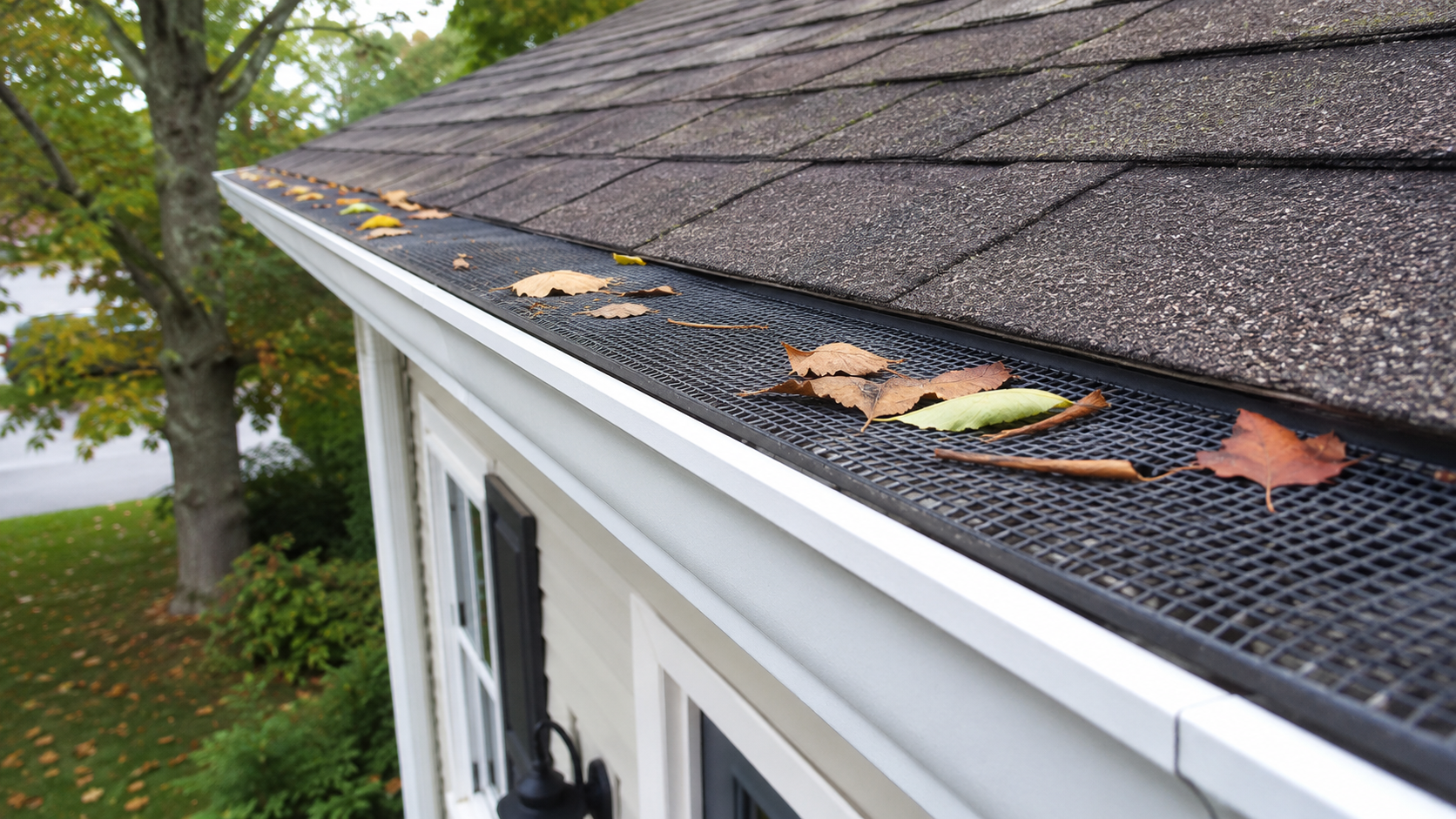
The best system depends on the roof, pitch, fascia, downspout locations, tree cover, and drainage needs. Some homes need a standard 5 inch system. Others benefit from 6 inch gutters and larger downspouts. Advanced Seamless also works with gutter covers for homeowners who want help reducing leaf and debris buildup.
Choosing the Right Gutter System for Your Home
Choosing gutters comes down to the house. The roof size, pitch, fascia, tree cover, downspout layout, and drainage around the foundation all matter. For many New England homes, seamless aluminum K-style gutters with the right downspouts are the most practical fit.
Advanced Seamless Gutters serves homeowners across its local service area with on-site fabrication, 5 inch and 6 inch seamless gutter options, multiple colors, cut-and-drop service, and practical recommendations based on the roof. For help choosing the right gutter style and size for your home, request a free estimate and talk through the options with the team.
Types of Gutters FAQ
What is the most common type of gutter?
K-style gutters are the most common residential gutter style. They mount flat against the fascia board and have a shaped front face that looks similar to crown molding. They also hold more water than half-round gutters of the same width.
Are 6 inch gutters worth the upgrade?
Yes, 6 inch gutters can be worth the upgrade for larger roofs, steep rooflines, long gutter runs, heavy tree cover, or homes that overflow during storms. They hold more water per linear foot than 5 inch gutters and are usually paired with larger 3x4 downspouts.
What size downspout goes with a 6 inch gutter?
A 6 inch gutter is typically paired with a 3x4 downspout. That larger downspout has about double the opening of a 2x3 downspout, which helps the system move water out faster during heavy rain or snowmelt.
Are half-round gutters better than K-style?
Not always. Half-round gutters shed debris well and look right on many historic homes, but K-style gutters usually hold more water at the same width. The better choice depends on the home’s style, roof, and drainage needs.